Anthim Market 2026: Expanding Biodefense and Emergency Preparedness
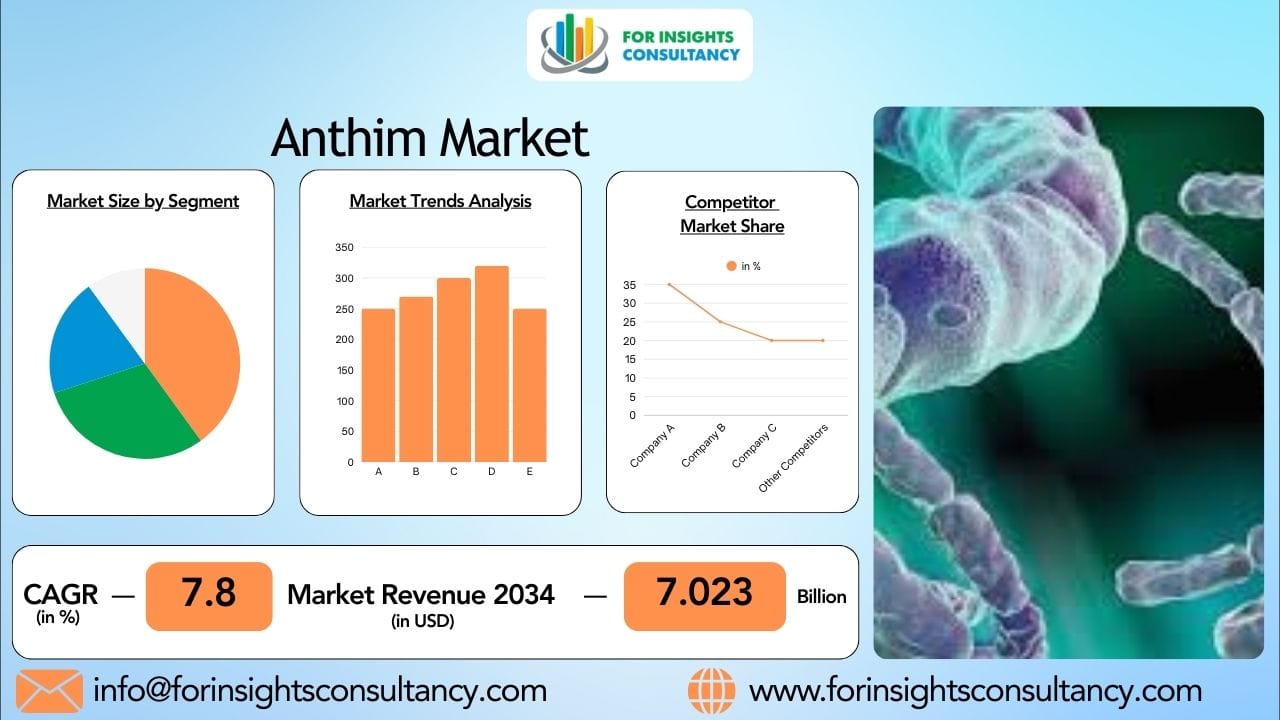
The global Anthim market — focused on monoclonal antibody therapies for inhalational anthrax treatment and post‑exposure prophylaxis — is projected to grow steadily by 2026

Introduction
The Anthim market centers around ANTHIM® (obiltoxaximab), a monoclonal antibody indicated for the treatment and prophylaxis of inhalational anthrax due to Bacillus anthracis. Anthim works by binding to the protective antigen component of the anthrax toxin to block toxin entry into cells.
Approved under emergency use provisions due to ethical constraints on human anthrax studies, Anthim is typically administered alongside antibacterial drugs and plays a critical role in biodefense therapy portfolios.
Key Market Drivers
Expanding Biodefense Preparedness Initiatives
Governments around the world are intensifying investments in biodefense countermeasures, including ** Anthim and other monoclonal antibody antitoxins **, as part of national public health emergency readiness.
Government Stockpiling Programs
Strategic stockpiles maintained by health agencies and military medical units are a major demand driver, ensuring Anthim is readily available for emergency response to anthrax threats and outbreaks.
Rising Global Biosecurity Awareness
Heightened focus on global health security and response planning — fueled by recent pandemic experiences — is prompting cross‑border collaborations and increased procurement of antitoxin therapies.
Treatment and Application Scope
Anthim’s clinical use includes:
Inhalational Anthrax Treatment
Used in combination with appropriate antibiotics for patients exposed to anthrax spores.
Post‑Exposure Prophylaxis (PEP)
Administered to prevent disease development in individuals exposed to anthrax when alternative therapies are unavailable or inappropriate.
Market Segmentation
The Anthim market can be segmented by:
By Indication
- Inhalational anthrax treatment
- Post‑exposure prophylaxis
By End‑User
- Hospitals & emergency care facilities
- Government and public health agencies
- Military medical facilities
Regional Market Insights
North America
North America leads the Anthim market thanks to significant biodefense investment, well‑established emergency preparedness programs, and a history of advanced monoclonal antibody adoption.
Asia‑Pacific
The Asia‑Pacific region is emerging as a rapid growth area as governments enhance biosecurity infrastructure and readiness measures.
Europe and Other Regions
Europe shows steady expansion with increased government procurement support, while other regions are building capacity through national health initiatives and emergency response frameworks.
Competitive Landscape
The Anthim market is highly specialized and driven by a small number of players focused on biodefense and critical care biologics. Manufacturer strategies revolve around strengthening supply chains, expanding distribution through national stockpile contracts, and aligning with government emergency response programs.
Market Challenges
Despite strong strategic interest, the Anthim market faces key challenges:
- Limited commercial use outside biodefense and emergency settings
- High cost of production and complex cold‑chain logistics
- Dependence on government procurement and stockpiling budgets
Efforts to integrate antitoxin countermeasures into broader infectious disease preparedness strategies may help mitigate some demand variability.
Emerging Trends
Several trends shaping the Anthim market include:
Greater integration of antitoxin therapies into national biodefense protocols
Expansion of emergency deployment frameworks for infectious threats
Technological improvements in monoclonal antibody manufacturing and storage
These developments are expected to strengthen the Anthim market’s strategic relevance in global health security planning.
Anthim Market Outlook 2026
The global Anthim market is forecast to grow steadily in 2026, with estimated expansion driven by government funding, biodefense stockpile growth, and increasing cross‑border collaboration on infectious disease preparedness. Analysts project steady market increases supported by investments in next‑generation antitoxin platforms and emergency response infrastructure.