Artificial Organ Market 2026: Biomedical Innovation and Growth
The Artificial Organ Market is expanding rapidly as medical technology advances offer life-saving solutions for organ failure.

Introduction
The Artificial Organ Market is becoming a critical part of modern healthcare as medical technologies provide life-saving alternatives for patients suffering from organ failure. Artificial organs are medical devices designed to replicate or support the function of natural organs such as the heart, kidneys, lungs, and pancreas.
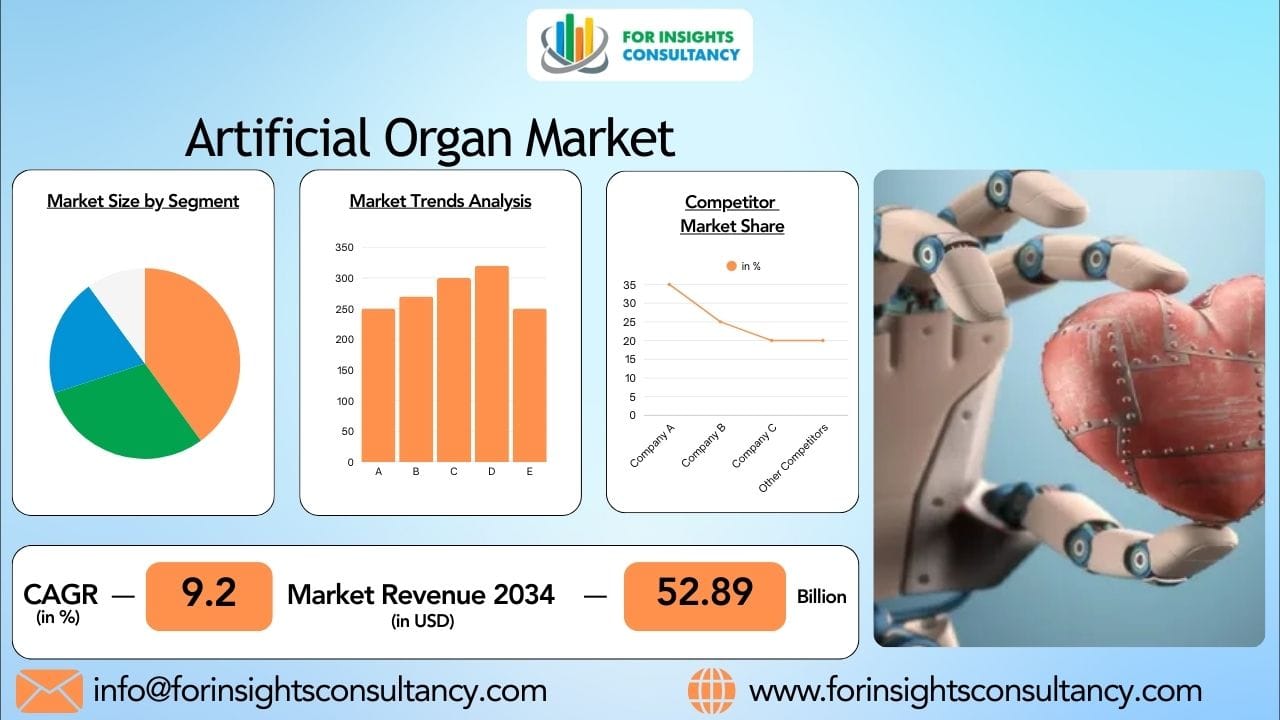
One of the most widely known examples is the Artificial Heart, which helps maintain blood circulation in patients with severe heart failure.
In 2026, the artificial organ market continues to grow due to increasing cases of chronic diseases, organ failure, and the shortage of donor organs worldwide. Advances in biomedical engineering, robotics, and regenerative medicine are further accelerating innovation in this field.
Key Drivers of the Artificial Organ Market
Rising Prevalence of Organ Failure
Chronic diseases such as heart disease, kidney failure, and diabetes are increasing globally, creating demand for artificial organ solutions.
Shortage of Donor Organs
The gap between organ transplant demand and available donors has led healthcare providers to explore artificial organ technologies.
Advancements in Biomedical Engineering
Breakthroughs in biomedical engineering and implantable medical devices are enabling the development of more efficient and durable artificial organs.
Growing Healthcare Investments
Governments and private organizations are investing heavily in medical technology research to improve patient outcomes and healthcare accessibility.
Emerging Technologies in Artificial Organs
Innovation in medical technology is transforming the artificial organ industry.
Bioartificial Organs
Bioartificial organs combine biological cells with artificial materials to replicate natural organ functions more effectively.
3D Bioprinting Technology
3D bioprinting is enabling researchers to create tissue structures that may eventually lead to fully functional artificial organs.
Implantable Medical Devices
Advanced implantable devices can support or replace organ functions while improving patient quality of life.
Wearable Artificial Organs
Portable artificial organ systems allow patients to maintain mobility while receiving life-supporting treatments.
Artificial Organ Market Segmentation
The artificial organ market can be segmented based on organ type, technology, and region.
By Organ Type
- Artificial Heart
- Artificial Kidney
- Artificial Pancreas
- Artificial Lung
Another widely used life-supporting device is the Artificial Kidney, commonly used for patients with severe kidney failure.
By Technology
- Mechanical Artificial Organs
- Electronic Artificial Organs
- Bioartificial Organs
By End User
- Hospitals
- Specialty Clinics
- Research Institutions
By Region
- North America
- Europe
- Asia-Pacific
- Latin America
- Middle East & Africa
Regional Market Insights
North America
North America dominates the artificial organ market due to advanced healthcare infrastructure, strong medical research institutions, and high adoption of medical technologies.
Europe
Europe has a well-established medical device industry and strong regulatory frameworks supporting artificial organ development.
Asia-Pacific
Asia-Pacific is expected to witness rapid growth due to increasing healthcare investments, rising chronic disease prevalence, and expanding medical infrastructure.
Competitive Landscape
The artificial organ market includes biotechnology companies, medical device manufacturers, and research institutions focused on organ replacement technologies.
Key strategies adopted by companies include:
- Investing in biomedical research and development
- Collaborating with hospitals and research institutes
- Developing advanced implantable medical devices
- Expanding global healthcare partnerships
These strategies help companies remain competitive in the rapidly evolving healthcare technology market.
Key Trends Shaping the Artificial Organ Market
Several important trends are influencing the artificial organ industry:
- Increasing adoption of implantable artificial organ devices
- Growth of biomedical engineering and regenerative medicine
- Development of bioartificial and 3D printed organs
- Expansion of advanced life-support medical technologies
These innovations are transforming how healthcare systems treat organ failure.
Artificial Organ Market Outlook for 2026 and Beyond
The Artificial Organ Market is expected to experience strong growth as medical technology continues to advance. The increasing need for organ replacement solutions, combined with rising healthcare investments, will drive the development of new artificial organ technologies.
With ongoing innovation in biomedical engineering, artificial organs are expected to play a crucial role in improving patient survival rates and quality of life.