Engineering Plastics Market Trends 2026: Demand from Automotive and Electronics
Engineering Plastics Market Growth Analysis Research Report By Type: Polyamide (PA), Polycarbonate (PC), Acrylonitrile Butadiene Styrene (ABS), Polybutylene Terephthalate (PBT), Polyoxymethylene (POM)

Introduction
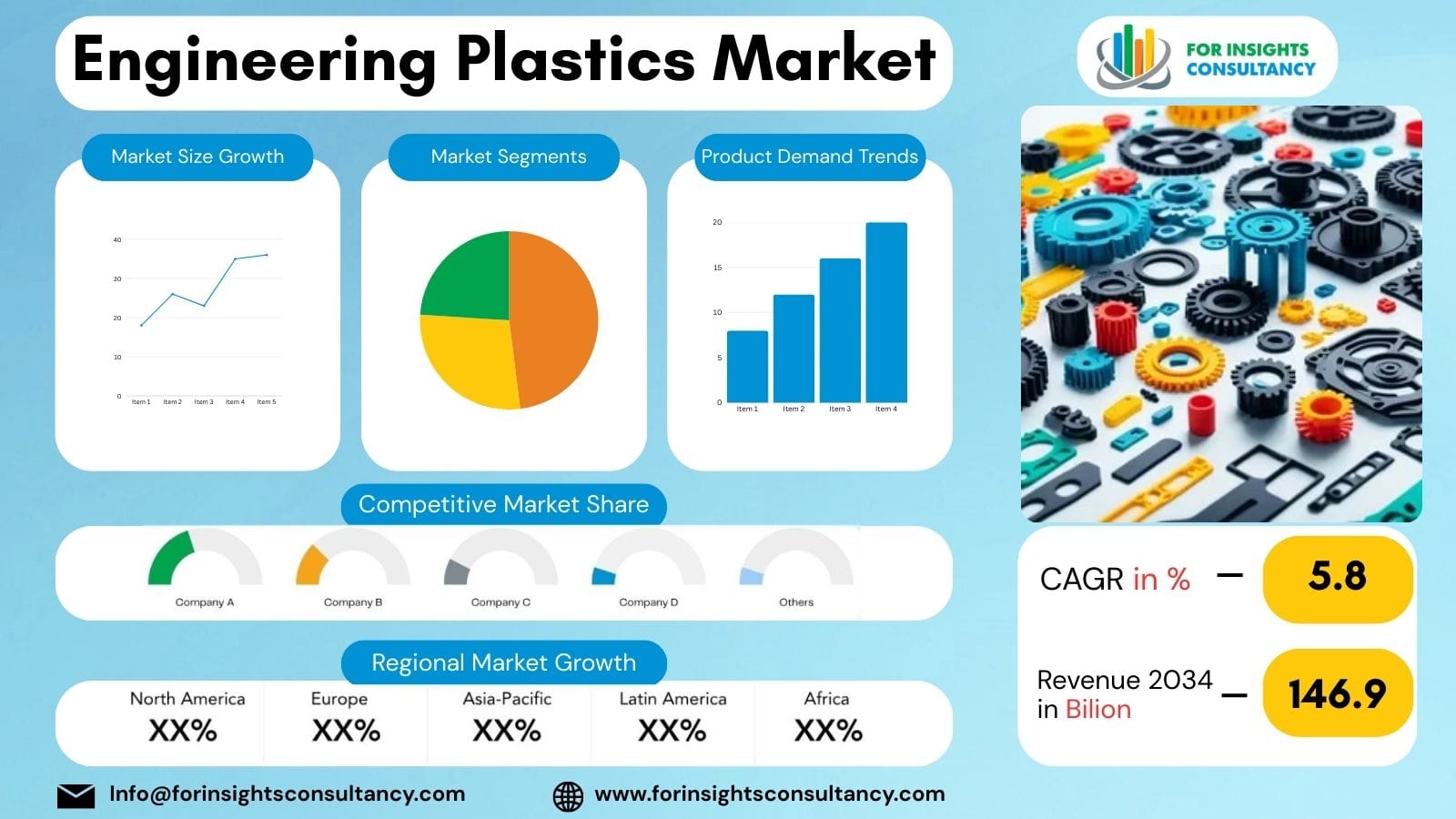
The Engineering Plastics Market in 2026 is projected to experience strong expansion driven by increasing demand from automotive, electrical and electronics, packaging, and industrial sectors. Industry estimates suggest that the global engineering plastics market could exceed USD 150 billion by 2026, growing at a CAGR of approximately 6–8% during the forecast period. The rising need for lightweight materials, improved durability, and high-performance polymers in advanced manufacturing applications is significantly contributing to market growth.
Engineering plastics offer superior mechanical strength, heat resistance, and chemical stability compared to conventional plastics. As industries continue to shift toward lightweight and high-performance materials, the engineering plastics market is expected to witness steady global demand.
Engineering Plastics Market Overview
Engineering plastics are high-performance polymer materials designed to provide enhanced mechanical and thermal properties compared to commodity plastics. These materials are widely used in applications requiring strength, durability, heat resistance, and chemical stability.
Engineering plastics are commonly utilized in manufacturing components for automotive systems, electrical devices, medical equipment, and industrial machinery.
Major types of engineering plastics include:
- Polyamide (PA)
- Polycarbonate (PC)
- Polyoxymethylene (POM)
- Acrylonitrile Butadiene Styrene (ABS)
- Polybutylene Terephthalate (PBT)
- Polyether Ether Ketone (PEEK)
These materials provide advantages such as improved impact resistance, dimensional stability, and excellent electrical insulation properties.
Engineering Plastics Market Drivers
Increasing Demand from Automotive Industry
The automotive sector is one of the primary drivers of the engineering plastics market. Manufacturers are increasingly using engineering plastics to reduce vehicle weight, improve fuel efficiency, and enhance overall performance.
Components such as dashboards, engine covers, interior trims, and structural parts are increasingly produced using high-performance plastics.
Growth in Electrical and Electronics Industry
Engineering plastics are widely used in electrical and electronic components due to their excellent insulation properties and heat resistance. The increasing production of smartphones, consumer electronics, and electronic appliances is driving market demand.
Rising Adoption in Industrial Applications
Engineering plastics are replacing traditional materials such as metals and glass in several industrial applications due to their lightweight nature and corrosion resistance.
Industries such as aerospace, manufacturing, and construction are adopting engineering plastics for improved performance and durability.
Challenges in the Engineering Plastics Market
High Production Costs
Engineering plastics are generally more expensive than conventional plastics due to advanced manufacturing processes and specialized raw materials. This cost factor may limit adoption in price-sensitive industries.
Environmental Concerns
The growing focus on sustainability and plastic waste management has led to stricter environmental regulations in many countries. Manufacturers must develop recyclable and environmentally friendly plastic solutions.
Raw Material Price Volatility
Engineering plastics rely on petrochemical-based raw materials. Fluctuations in crude oil prices can impact production costs and market stability.
Engineering Plastics Market Trends
Development of Bio-Based Engineering Plastics
Manufacturers are increasingly focusing on developing bio-based engineering plastics derived from renewable sources. These materials help reduce environmental impact while maintaining high performance.
Increasing Use in Electric Vehicles
Electric vehicle manufacturers are using engineering plastics in battery components, electrical systems, and lightweight structural parts. This trend is expected to create significant growth opportunities in the coming years.
Advancements in Polymer Technology
Continuous research and innovation in polymer science are enabling the development of advanced engineering plastics with enhanced strength, heat resistance, and chemical stability.
Regional Analysis
Asia-Pacific
Asia-Pacific dominates the engineering plastics market due to strong industrial growth in countries such as China, Japan, South Korea, and India. Rapid expansion of automotive manufacturing and electronics production is supporting market growth in this region.
North America
North America is witnessing steady growth due to increased adoption of engineering plastics in automotive, aerospace, and medical applications.
Europe
Europe is focusing on sustainable materials and lightweight automotive components, which is boosting the demand for advanced engineering plastics.
Competitive Landscape
The engineering plastics market is highly competitive with several global companies focusing on product innovation and strategic expansion.
Major companies operating in the market include:
- BASF SE
- SABIC
- Covestro AG
- DuPont de Nemours Inc.
- Celanese Corporation
- Solvay SA
These companies invest significantly in research and development to introduce advanced polymer technologies and strengthen their market position.
What is the Engineering Plastics Market Size in 2026?
The Engineering Plastics Market size in 2026 is projected to exceed USD 150 billion, supported by rising demand from automotive manufacturing, electrical and electronics industries, and industrial applications.
Future Outlook of the Engineering Plastics Market
The future outlook for the engineering plastics market remains highly positive as industries continue to demand lightweight, durable, and high-performance materials.
Emerging technologies such as electric vehicles, renewable energy systems, and advanced electronics will further increase the demand for engineering plastics worldwide. Additionally, the development of recyclable and bio-based engineering plastics will shape the future of the industry.
Frequently Asked Questions
What is the engineering plastics market size in 2026?
The engineering plastics market is expected to surpass USD 150 billion by 2026, driven by increasing demand from automotive, electronics, and industrial sectors.
What are the key growth drivers of the engineering plastics market?
Major growth drivers include rising automotive production, growth in electrical and electronics manufacturing, increasing adoption of lightweight materials, and advancements in polymer technology.
Which region dominates the engineering plastics market?
Asia-Pacific dominates the engineering plastics market due to strong manufacturing activities and growing demand from automotive and electronics industries.
What are the major trends in the engineering plastics industry?
Key trends include development of bio-based plastics, increasing use in electric vehicles, and advancements in polymer processing technologies.
Who are the major players in the engineering plastics market?
Leading companies include BASF SE, SABIC, Covestro AG, DuPont de Nemours Inc., Celanese Corporation, and Solvay SA.