Food Flavors Market Growth 2026: Demand for Natural and Clean-Label Flavors
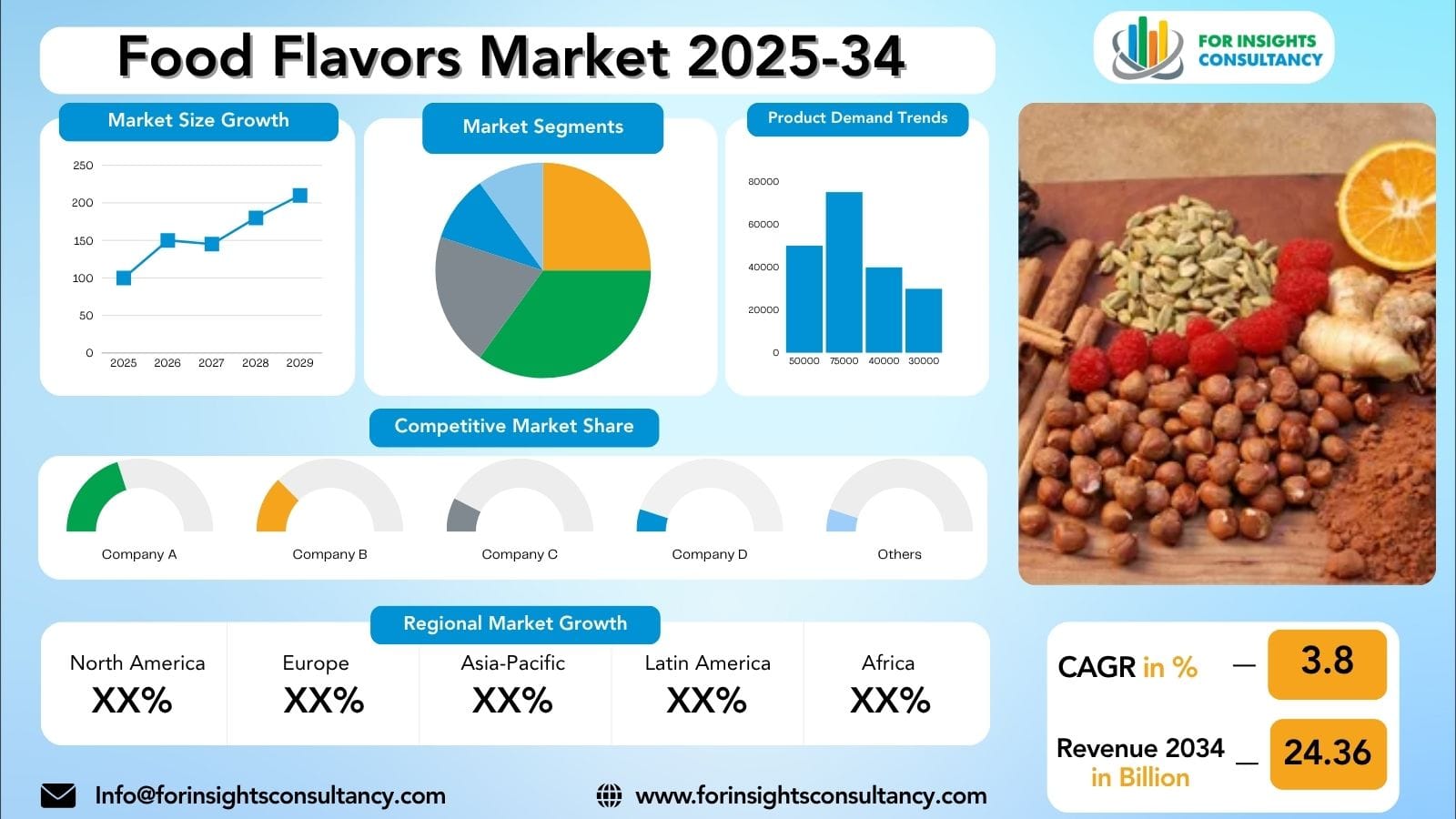
Food Flavors Market Is Forecast to Increase from USD 17.69 Billion In 2025 To USD 24.36 Billion By 2034, At A CAGR Of 3.8%.

Introduction
The Food Flavors Market in 2026 is expected to experience strong expansion driven by increasing demand for processed foods, beverages, and innovative taste experiences. The market is projected to grow at a CAGR of around 5–7% during the forecast period, supported by rising consumer preference for natural ingredients and clean-label products. Food flavors play a crucial role in enhancing taste, aroma, and overall sensory appeal in food and beverage products. As manufacturers focus on product innovation and healthier formulations, the demand for both natural and synthetic flavor solutions continues to grow across the global food industry.
Food Flavors Market Overview
Food flavors are ingredients used to enhance or modify the taste and aroma of food products. These flavors can be natural, artificial, or nature-identical and are widely used in applications such as beverages, bakery products, dairy, confectionery, snacks, and ready-to-eat meals.
The rapid growth of the processed food and beverage sector has significantly increased the demand for flavoring solutions. Manufacturers are investing heavily in research and development to create unique flavor profiles that meet changing consumer preferences. Additionally, the increasing popularity of plant-based foods and functional beverages is further boosting demand for innovative flavor technologies.
Key Growth Drivers
Rising Demand for Processed and Convenience Foods
Modern lifestyles and busy schedules are increasing the consumption of processed and packaged foods. Food flavors help maintain consistent taste and improve the sensory appeal of these products.
Growing Preference for Natural Ingredients
Consumers are becoming more health-conscious and prefer natural food flavors derived from fruits, vegetables, herbs, and spices. This shift is encouraging manufacturers to develop clean-label flavor solutions.
Expansion of the Global Beverage Industry
Flavors are essential components in beverages such as soft drinks, energy drinks, flavored water, and alcoholic beverages. Continuous innovation in beverage formulations is fueling market demand.
Increasing Demand for Ethnic and Exotic Flavors
Consumers are showing growing interest in international cuisines and unique taste experiences. This trend has increased demand for exotic and regional flavor profiles in food products.
Market Challenges
Regulatory Compliance
Food flavor ingredients must comply with strict regulations established by food safety authorities in different regions. These regulatory requirements can increase product development costs.
Volatility in Raw Material Prices
Natural flavor ingredients such as fruits, herbs, and spices are subject to supply chain disruptions and price fluctuations, which can affect production costs.
Shelf-Life Stability
Maintaining flavor stability in processed foods over long shelf-life periods remains a technical challenge for manufacturers.
Key Market Trends
Growth of Natural and Clean-Label Flavors
Consumers increasingly prefer products with natural ingredients and minimal additives. This trend is driving the development of plant-based and organic flavor solutions.
Innovation in Flavor Technologies
Advanced technologies such as encapsulation and flavor modulation are enabling manufacturers to enhance taste while reducing sugar, salt, and fat content.
Rising Popularity of Plant-Based Foods
The rapid expansion of plant-based meat and dairy alternatives has created strong demand for flavor systems that replicate traditional food tastes.
Functional and Health-Oriented Flavors
Manufacturers are developing flavors designed to complement functional foods containing probiotics, vitamins, and other health-promoting ingredients.
Regional Analysis
North America
North America holds a significant share of the food flavors market due to the presence of major food and beverage companies, high consumption of processed foods, and strong innovation in flavor technologies.
Europe
Europe is another major market driven by strict food safety regulations, growing demand for natural ingredients, and increasing consumer interest in gourmet and organic foods.
Asia-Pacific
The Asia-Pacific region is expected to witness the fastest growth due to expanding food processing industries, rising disposable incomes, and increasing urbanization in countries such as China, India, and Japan.
Latin America and Middle East & Africa
These regions are experiencing steady growth as food manufacturing industries expand and consumer demand for packaged foods continues to rise.
Competitive Landscape
The global food flavors market is highly competitive with several multinational companies focusing on innovation, mergers, and product diversification. Companies are investing in research and development to create customized flavor solutions tailored to specific food applications.
Key competitive strategies include:
- Development of natural and organic flavor products
- Strategic acquisitions and partnerships
- Expansion into emerging markets
- Investment in flavor technology research
What is the Food Flavors Market Size in 2026?
The Food Flavors Market in 2026 is projected to grow steadily due to increasing demand from the food processing and beverage industries. Rising consumer preference for natural and innovative flavor solutions is expected to support long-term market expansion.
Future Outlook
The future of the food flavors market looks promising as consumer tastes continue to evolve and demand for unique flavor experiences increases. Advancements in flavor extraction technologies, growth in plant-based foods, and the rising focus on health-conscious diets are expected to drive innovation and market expansion over the coming years.
Companies that invest in natural ingredients, sustainable sourcing, and advanced flavor technologies are likely to gain a competitive advantage in the global market.
FAQ Section
What is the Food Flavors Market size in 2026?
The Food Flavors Market in 2026 is expected to grow steadily with strong demand from processed food, beverage, and functional food industries worldwide.
What are the key growth drivers of the Food Flavors Market?
Major drivers include rising demand for processed foods, increasing preference for natural ingredients, and continuous innovation in beverage and food products.
Which region dominates the Food Flavors Market?
North America currently dominates the market due to the presence of major food companies and high consumption of flavored food products.
What are the future trends in the Food Flavors industry?
Key trends include clean-label flavors, plant-based food flavor systems, flavor encapsulation technology, and functional flavor development.
Who are the main consumers of food flavors?
Food manufacturers, beverage companies, bakery producers, dairy processors, and snack manufacturers are the primary users of food flavor ingredients.