Fruit Pulp Market 2026: What Investors and Manufacturers Should Know
The global fruit pulp market is set for significant growth in 2026, fueled by rising consumer demand for natural and healthy food products, innovation in processing technologies, and expanding applications in beverages and dairy products.

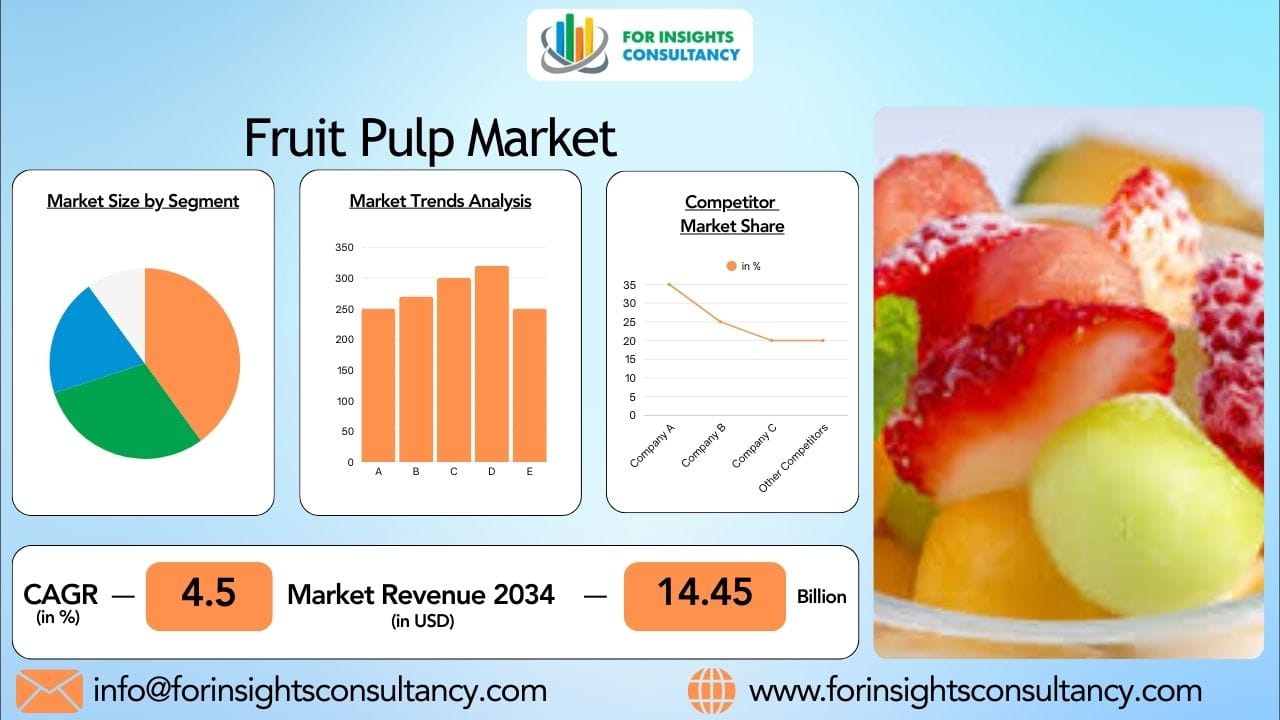
Introduction
Fruit pulp forms the backbone of many food and beverage products, ranging from juices and smoothies to jams, yogurts, and confectioneries. As health-conscious consumers drive demand for natural and minimally processed ingredients, the Fruit Pulp Market 2026 is poised to witness robust growth globally.
This article provides a comprehensive analysis of market trends, drivers, challenges, and opportunities shaping the fruit pulp industry in 2026.
Key Market Trends in 2026
- Rising Health and Wellness Focus:
Consumers are increasingly seeking natural and functional foods rich in vitamins, antioxidants, and fiber. Fruit pulp offers a convenient way to meet this demand. - Innovative Processing Technologies:
Advanced extraction, dehydration, and freeze-drying methods are improving shelf life, nutrient retention, and quality of fruit pulp. - Expansion in Ready-to-Use Products:
The rise of ready-to-use fruit pulp for beverages, dairy, and confectionery industries is driving demand in both developed and emerging markets. - Sustainability Initiatives:
Companies are focusing on reducing food waste by utilizing by-products from fruit processing, enhancing sustainability across the supply chain. - Growth in Emerging Markets:
Asia-Pacific, Latin America, and Africa are experiencing growing fruit pulp production due to favorable climatic conditions and increasing fruit cultivation.
Market Drivers
- Increasing Demand for Natural Ingredients: A surge in preference for natural flavors and organic products.
- Growth in the Beverage Industry: Rising consumption of fruit juices, smoothies, and functional beverages.
- Technological Advancements: Improved extraction and preservation techniques reduce losses and maintain quality.
- Government Support: Policies promoting fruit cultivation and processing infrastructure boost market growth.
Challenges Facing the Market
- Price Volatility of Raw Fruits: Seasonal fluctuations can impact production costs.
- Supply Chain and Storage Issues: Maintaining quality and freshness requires efficient cold chain logistics.
- Competition from Synthetic Alternatives: Artificial fruit concentrates can sometimes challenge natural pulp adoption.
Competitive Landscape
Key players in the global fruit pulp market focus on product innovation, strategic partnerships, and geographical expansion.
Leading Companies in 2026:
- Döhler Group
- Kerry Group
- Ingredion Incorporated
- Givaudan
- Corbion N.V.
These companies are emphasizing sustainable sourcing, value-added products, and expanding into emerging markets to strengthen their market presence.
Future Outlook (2026 and Beyond)
The global fruit pulp market is expected to grow at a CAGR of 4–6% through 2026. Growth is likely to be driven by increasing demand for functional and healthy foods, adoption of advanced processing technologies, and expansion in ready-to-use applications.
Companies that focus on sustainability, product innovation, and efficient supply chains will gain a competitive edge.