Herbicides Market 2026: Growth, Trends, and Industry Outlook
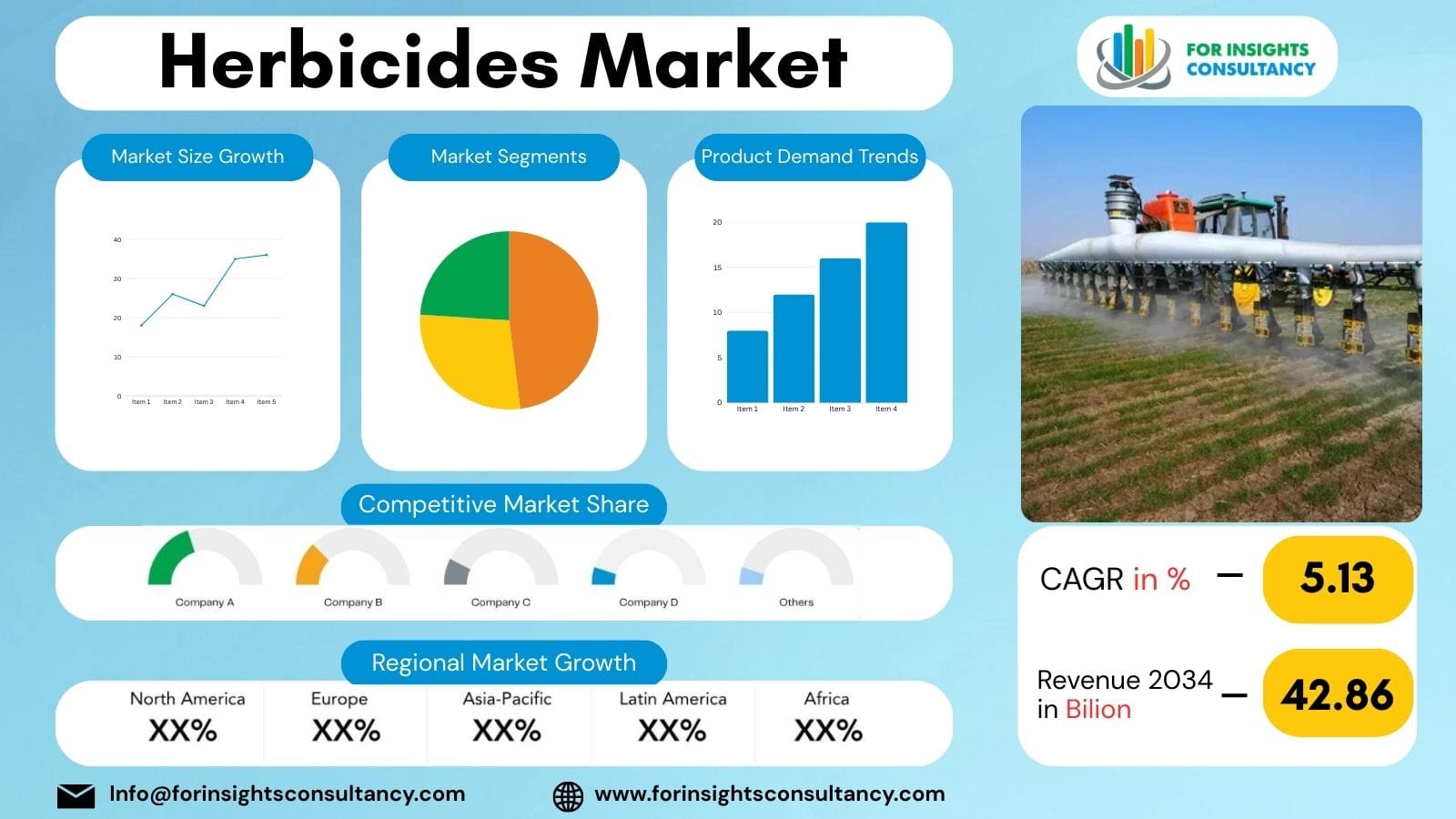
Herbicides Market Size & Forecast: Industry to grow from USD 42.86 Billion (2025) to USD 67.34 Billion (2034) with 5.13% CAGR. See growth drivers and demand trends.

Introduction
The Herbicides Market in 2026 is expected to witness steady expansion due to rising global food demand, increasing adoption of modern farming practices, and the need for effective weed control in agriculture. Herbicides play a crucial role in improving crop yield by eliminating unwanted plants that compete for nutrients, water, and sunlight. Industry estimates indicate the global herbicides market could exceed USD 40 billion by 2026, growing at a stable CAGR as farmers increasingly adopt advanced crop protection solutions. The growth of precision agriculture, biotechnology crops, and sustainable weed management practices is further driving the expansion of the herbicides industry.
Herbicides Market Overview
Herbicides are chemical substances used to control or eliminate unwanted vegetation, commonly referred to as weeds. These products are widely used in agriculture, horticulture, forestry, and turf management to maintain healthy crop growth and improve productivity.
Herbicides can be classified based on their mode of application and function, including:
- Selective herbicides (target specific weeds without harming crops)
- Non-selective herbicides (eliminate all vegetation)
- Pre-emergent herbicides (applied before weeds grow)
- Post-emergent herbicides (applied after weeds appear)
Modern herbicide formulations are designed to improve efficiency, reduce environmental impact, and support sustainable agricultural practices.
Key Growth Drivers in the Herbicides Market
Rising Global Food Demand
The global population continues to grow, increasing pressure on agricultural production systems. Farmers are adopting herbicides to protect crops and maximize yields.
Adoption of Modern Farming Techniques
Mechanized farming, precision agriculture, and improved crop protection strategies are boosting the demand for herbicides across major agricultural economies.
Expansion of Commercial Agriculture
Large-scale commercial farming operations require efficient weed management solutions to maintain productivity and reduce labor costs.
Development of Genetically Modified Crops
Herbicide-tolerant crops allow farmers to use specific herbicides without damaging crops, improving weed control efficiency and boosting market demand.
Market Challenges
Environmental and Regulatory Concerns
Growing concerns about environmental impact and chemical residues have led to stricter government regulations on herbicide usage.
Herbicide Resistance
Continuous use of certain herbicides has led to the development of resistant weed species, posing challenges for effective weed management.
Shift Toward Organic Farming
The increasing popularity of organic agriculture may reduce demand for chemical herbicides in certain regions.
Emerging Trends in the Herbicides Market
Bio-Based Herbicides
Companies are developing environmentally friendly herbicides derived from natural sources to address sustainability concerns.
Precision Agriculture Integration
Advanced technologies such as drones and smart sprayers are enabling targeted herbicide application, reducing chemical usage and improving efficiency.
Integrated Weed Management
Farmers are combining chemical herbicides with biological and mechanical methods to create sustainable weed control strategies.
Innovation in Formulations
Manufacturers are focusing on advanced herbicide formulations that improve effectiveness while reducing environmental impact.
Regional Analysis
North America
North America remains a major market due to large-scale commercial farming and strong adoption of advanced agricultural technologies.
Europe
The European market is influenced by strict environmental regulations and increasing demand for sustainable agricultural practices.
Asia-Pacific
Asia-Pacific is expected to experience strong growth due to expanding agricultural activities and rising food demand in countries such as India and China.
Latin America
Brazil and Argentina are key markets in this region due to large soybean and corn farming operations.
Competitive Landscape
The herbicides market is highly competitive with several global agrochemical companies investing in research and development to create advanced crop protection products.
Key companies operating in the market include:
- Bayer AG
- Syngenta Group
- BASF SE
- Corteva Agriscience
- FMC Corporation
- UPL Limited
These companies are focusing on innovative formulations, sustainable herbicide solutions, and strategic partnerships to strengthen their global presence.
Herbicides Market Size in 2026
What is the Herbicides Market size in 2026?
The global herbicides market is projected to reach approximately USD 40 billion by 2026, driven by rising food demand, expansion of commercial farming, and increasing adoption of modern crop protection technologies.
Future Outlook
The herbicides market is expected to continue growing as agriculture becomes more technology-driven and productivity-focused. Increasing adoption of precision farming, sustainable crop protection practices, and advanced herbicide formulations will shape the future of the industry.
With rising investment in agricultural innovation and improved weed management solutions, the herbicides market will remain a critical component of global food production systems.
Frequently Asked Questions (FAQ)
What is the Herbicides market size in 2026?
The global herbicides market is expected to reach around USD 40 billion by 2026, supported by increasing agricultural productivity requirements and crop protection needs.
What are the key drivers of the Herbicides market?
Major drivers include rising global food demand, expansion of commercial agriculture, adoption of modern farming technologies, and development of herbicide-tolerant crops.
Which region dominates the Herbicides market?
North America currently dominates the market due to large-scale farming operations and advanced agricultural technologies.
What are the emerging trends in the Herbicides market?
Key trends include bio-based herbicides, precision agriculture, integrated weed management, and innovation in sustainable crop protection products.
Who are the major companies in the Herbicides market?
Leading companies include Bayer AG, Syngenta Group, BASF SE, Corteva Agriscience, FMC Corporation, and UPL Limited. in 2026 is expected to witness steady expansion due to rising global food demand, increasing adoption of modern farming practices, and the need for effective weed control in agriculture. Herbicides play a crucial role in improving crop yield by eliminating unwanted plants that compete for nutrients, water, and sunlight. Industry estimates indicate the global herbicides market could exceed USD 40 billion by 2026, growing at a stable CAGR as farmers increasingly adopt advanced crop protection solutions. The growth of precision agriculture, biotechnology crops, and sustainable weed management practices is further driving the expansion of the herbicides industry.
Herbicides Market Overview
Herbicides are chemical substances used to control or eliminate unwanted vegetation, commonly referred to as weeds. These products are widely used in agriculture, horticulture, forestry, and turf management to maintain healthy crop growth and improve productivity.
Herbicides can be classified based on their mode of application and function, including:
- Selective herbicides (target specific weeds without harming crops)
- Non-selective herbicides (eliminate all vegetation)
- Pre-emergent herbicides (applied before weeds grow)
- Post-emergent herbicides (applied after weeds appear)
Modern herbicide formulations are designed to improve efficiency, reduce environmental impact, and support sustainable agricultural practices.
Key Growth Drivers in the Herbicides Market
Rising Global Food Demand
The global population continues to grow, increasing pressure on agricultural production systems. Farmers are adopting herbicides to protect crops and maximize yields.
Adoption of Modern Farming Techniques
Mechanized farming, precision agriculture, and improved crop protection strategies are boosting the demand for herbicides across major agricultural economies.
Expansion of Commercial Agriculture
Large-scale commercial farming operations require efficient weed management solutions to maintain productivity and reduce labor costs.
Development of Genetically Modified Crops
Herbicide-tolerant crops allow farmers to use specific herbicides without damaging crops, improving weed control efficiency and boosting market demand.
Market Challenges
Environmental and Regulatory Concerns
Growing concerns about environmental impact and chemical residues have led to stricter government regulations on herbicide usage.
Herbicide Resistance
Continuous use of certain herbicides has led to the development of resistant weed species, posing challenges for effective weed management.
Shift Toward Organic Farming
The increasing popularity of organic agriculture may reduce demand for chemical herbicides in certain regions.
Emerging Trends in the Herbicides Market
Bio-Based Herbicides
Companies are developing environmentally friendly herbicides derived from natural sources to address sustainability concerns.
Precision Agriculture Integration
Advanced technologies such as drones and smart sprayers are enabling targeted herbicide application, reducing chemical usage and improving efficiency.
Integrated Weed Management
Farmers are combining chemical herbicides with biological and mechanical methods to create sustainable weed control strategies.
Innovation in Formulations
Manufacturers are focusing on advanced herbicide formulations that improve effectiveness while reducing environmental impact.
Regional Analysis
North America
North America remains a major market due to large-scale commercial farming and strong adoption of advanced agricultural technologies.
Europe
The European market is influenced by strict environmental regulations and increasing demand for sustainable agricultural practices.
Asia-Pacific
Asia-Pacific is expected to experience strong growth due to expanding agricultural activities and rising food demand in countries such as India and China.
Latin America
Brazil and Argentina are key markets in this region due to large soybean and corn farming operations.
Competitive Landscape
The herbicides market is highly competitive with several global agrochemical companies investing in research and development to create advanced crop protection products.
Key companies operating in the market include:
- Bayer AG
- Syngenta Group
- BASF SE
- Corteva Agriscience
- FMC Corporation
- UPL Limited
These companies are focusing on innovative formulations, sustainable herbicide solutions, and strategic partnerships to strengthen their global presence.
Herbicides Market Size in 2026
What is the Herbicides Market size in 2026?
The global herbicides market is projected to reach approximately USD 40 billion by 2026, driven by rising food demand, expansion of commercial farming, and increasing adoption of modern crop protection technologies.
Future Outlook
The herbicides market is expected to continue growing as agriculture becomes more technology-driven and productivity-focused. Increasing adoption of precision farming, sustainable crop protection practices, and advanced herbicide formulations will shape the future of the industry.
With rising investment in agricultural innovation and improved weed management solutions, the herbicides market will remain a critical component of global food production systems.
Frequently Asked Questions (FAQ)
What is the Herbicides market size in 2026?
The global herbicides market is expected to reach around USD 40 billion by 2026, supported by increasing agricultural productivity requirements and crop protection needs.
What are the key drivers of the Herbicides market?
Major drivers include rising global food demand, expansion of commercial agriculture, adoption of modern farming technologies, and development of herbicide-tolerant crops.
Which region dominates the Herbicides market?
North America currently dominates the market due to large-scale farming operations and advanced agricultural technologies.
What are the emerging trends in the Herbicides market?
Key trends include bio-based herbicides, precision agriculture, integrated weed management, and innovation in sustainable crop protection products.
Who are the major companies in the Herbicides market?
Leading companies include Bayer AG, Syngenta Group, BASF SE, Corteva Agriscience, FMC Corporation, and UPL Limited.