Molecular Breeding Market 2026: Technology Trends and Growth Opportunities
Molecular Breeding Market Growth Analysis Research Report By Marker Type(Simple Sequence Repeats (SSR), Single Nucleotide Polymorphism (SNP), Quantitative Trait Loci (QTL)

Market Overview
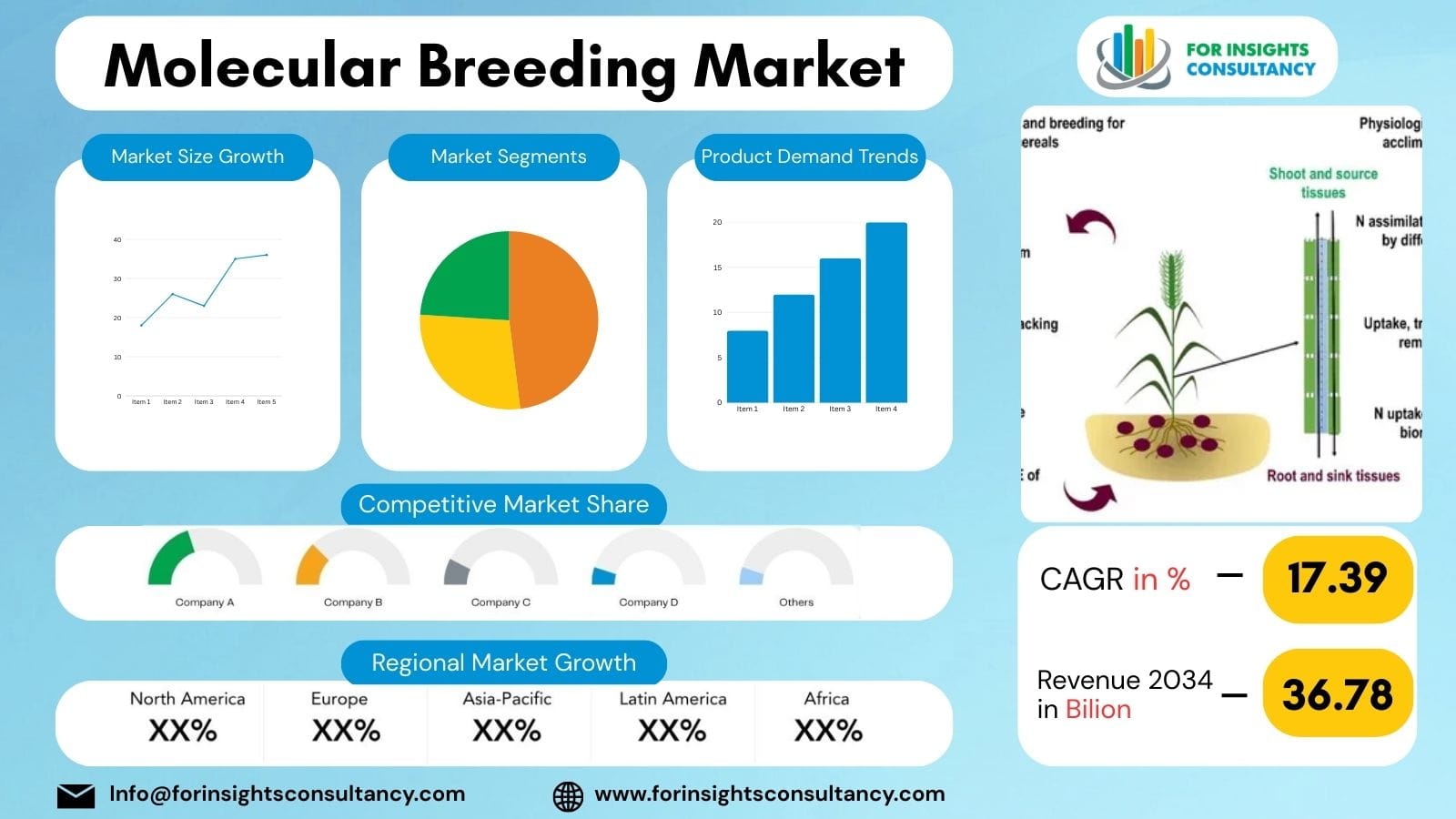
The Molecular Breeding Market in 2026 is expected to witness significant growth driven by rising global demand for high-yield crops, increasing adoption of advanced biotechnology in agriculture, and growing concerns about food security. Molecular breeding combines modern genetic tools with traditional breeding methods to accelerate crop improvement and develop plant varieties with enhanced traits such as disease resistance, drought tolerance, and improved productivity.
The global molecular breeding market is projected to grow at a strong CAGR through 2030 as agricultural biotechnology companies, research institutes, and seed producers invest heavily in genomics-based breeding techniques. Increasing population, climate change challenges, and the need for sustainable agriculture practices are further encouraging the adoption of molecular breeding technologies worldwide.
As governments and agricultural organizations promote advanced crop research, the molecular breeding industry is expected to play a crucial role in shaping the future of modern agriculture.
Key Growth Drivers
Rising Global Food Demand
The global population continues to increase, creating pressure on agricultural systems to produce higher crop yields. Molecular breeding technologies enable the development of improved crop varieties that can deliver better productivity and resilience.
Advancements in Genomic Technologies
Rapid developments in genome sequencing, marker-assisted selection, and bioinformatics tools are accelerating the adoption of molecular breeding. These technologies allow breeders to identify desirable genetic traits quickly and develop improved crop varieties more efficiently.
Increasing Investments in Agricultural Biotechnology
Governments, research institutions, and private companies are increasing investments in agricultural biotechnology research. These investments are driving innovation and expanding the application of molecular breeding techniques.
Climate Change and Crop Resilience
Climate variability and extreme weather conditions are affecting crop production globally. Molecular breeding helps develop climate-resilient crops capable of withstanding drought, pests, and diseases.
Market Challenges
High Research and Development Costs
Developing new crop varieties using molecular breeding techniques requires advanced laboratories, specialized expertise, and significant financial investment. These factors may limit adoption among smaller agricultural research organizations.
Regulatory and Ethical Concerns
Some regions have strict regulations regarding genetic technologies in agriculture. Regulatory approval processes and public concerns about biotechnology can slow the adoption of molecular breeding innovations.
Emerging Market Trends
Integration of Artificial Intelligence in Plant Breeding
Artificial intelligence and data analytics are increasingly being used to analyze genomic data and predict plant traits. This integration is helping breeders accelerate the crop improvement process.
Growing Adoption of Marker-Assisted Selection
Marker-assisted selection is becoming one of the most widely used techniques in molecular breeding due to its ability to identify desirable genetic traits early in the breeding process.
Expansion of Precision Agriculture
Precision agriculture technologies are supporting the adoption of molecular breeding by providing better data on crop performance and environmental conditions.
Regional Analysis
North America
North America holds a significant share of the molecular breeding market due to strong biotechnology research infrastructure, government funding, and the presence of major agricultural biotechnology companies.
Europe
Europe is experiencing steady growth in the molecular breeding industry driven by increased agricultural research activities and investments in sustainable farming practices.
Asia-Pacific
Asia-Pacific is expected to witness the fastest growth in the molecular breeding market due to increasing population, expanding agricultural production, and government initiatives supporting agricultural innovation.
Latin America
Latin America has strong agricultural potential and is increasingly adopting molecular breeding technologies to improve crop productivity and competitiveness in global markets.
Competitive Landscape
The molecular breeding industry is characterized by strong competition among biotechnology companies, seed manufacturers, and research institutions focusing on crop innovation and advanced genetic technologies.
Key companies operating in the market include:
- Corteva Agriscience
- Bayer CropScience
- Syngenta Group
- BASF SE
- KWS SAAT SE & Co. KGaA
- Limagrain
These companies are investing in genomic research, digital breeding platforms, and advanced molecular technologies to develop improved crop varieties and strengthen their global market presence.
Molecular Breeding Market Size in 2026
The Molecular Breeding Market in 2026 is expected to grow steadily as agricultural biotechnology advances and global demand for high-yield, climate-resilient crops increases. Molecular breeding technologies help accelerate crop improvement by using genetic markers and genomic tools to develop improved plant varieties.
Future Market Outlook
The future of the molecular breeding market looks promising as agriculture increasingly adopts biotechnology and genomic innovations. Advances in genome editing, digital agriculture, and plant biotechnology are expected to transform crop development processes.
Growing investments in agricultural research, combined with increasing demand for sustainable farming solutions, will likely drive strong market expansion in the coming years.
Frequently Asked Questions (FAQs)
What is the Molecular Breeding Market size in 2026?
The Molecular Breeding Market in 2026 is expected to grow significantly due to increasing demand for improved crop varieties and the adoption of advanced agricultural biotechnology.
What are the key drivers of the Molecular Breeding Market?
Key drivers include rising global food demand, advancements in genomic technologies, increasing agricultural biotechnology investments, and the need for climate-resilient crops.
Which region dominates the Molecular Breeding Market?
North America currently holds a strong market share due to its advanced biotechnology research infrastructure and the presence of major agricultural technology companies.
What technologies are used in molecular breeding?
Technologies used include marker-assisted selection, genomic selection, DNA sequencing, and advanced bioinformatics tools.
What are the future trends in the Molecular Breeding Market?
Future trends include the integration of artificial intelligence in plant breeding, expansion of precision agriculture, and increased use of genomic data for crop improvement.