Motor Vehicle Parts Market 2026: Technology and Aftermarket Growth
The Motor Vehicle Parts Market is expanding rapidly due to increasing vehicle production, growing automotive aftermarket demand, and advancements in vehicle technologies

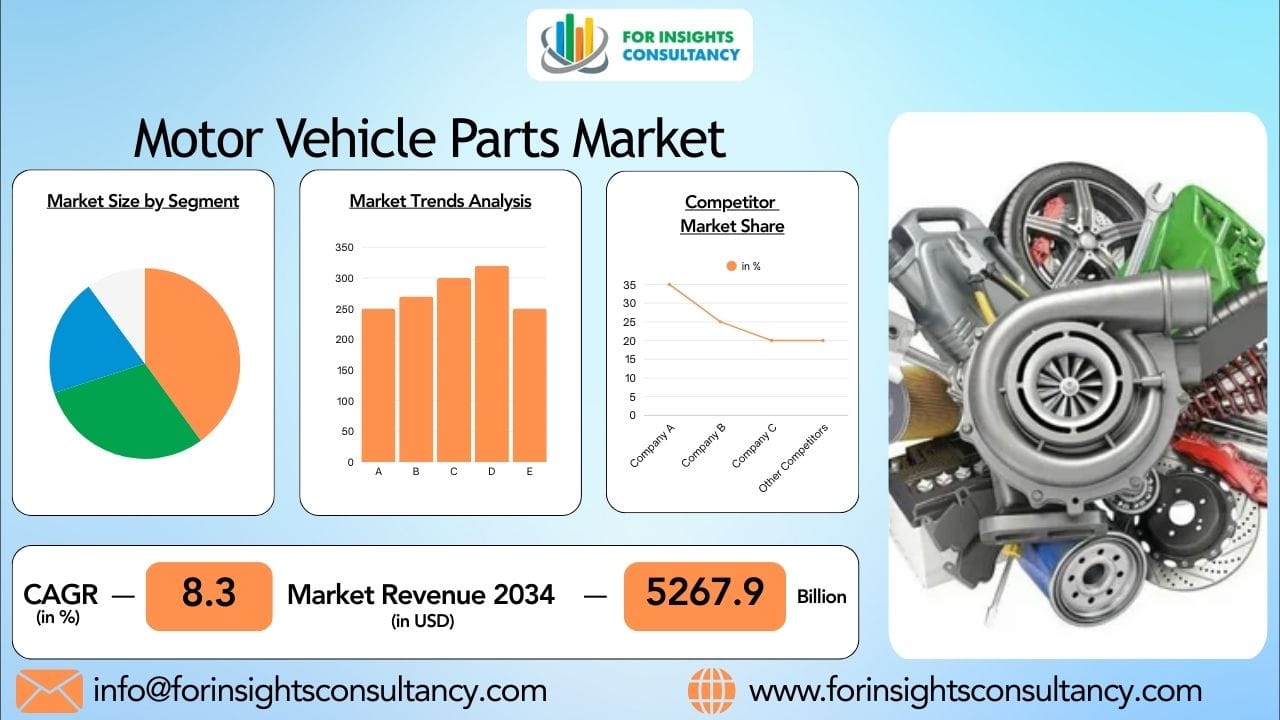
Introduction
The Motor Vehicle Parts Market is a vital segment of the global automotive industry, supporting the production, maintenance, and performance of vehicles. Motor vehicle parts include a wide range of components such as engines, braking systems, electrical systems, suspension components, and transmission systems.
In 2026, the market is witnessing significant growth driven by rising global vehicle production, increasing demand for automotive aftermarket services, and technological advancements in vehicle systems. As vehicles become more complex and feature-rich, the demand for high-quality components continues to grow.
Automotive manufacturers and suppliers are investing heavily in innovation to develop efficient, lightweight, and durable vehicle parts that enhance performance, safety, and fuel efficiency.
Key Drivers of the Motor Vehicle Parts Market
Rising Global Vehicle Production
The growth of automotive manufacturing worldwide is a key driver of demand for vehicle components. As vehicle production increases, the need for high-quality parts and components also expands.
Expanding Automotive Aftermarket
The automotive aftermarket sector plays a major role in the motor vehicle parts market. Replacement parts, maintenance services, and upgrades contribute significantly to industry growth.
Technological Advancements in Vehicles
Modern vehicles integrate advanced technologies such as electronic control systems, sensors, and connectivity features. These innovations are increasing demand for specialized automotive components.
Increasing Focus on Vehicle Safety and Efficiency
Manufacturers are developing advanced braking systems, lightweight materials, and efficient engine components to improve vehicle safety and fuel efficiency.
Emerging Technologies in Automotive Parts
Innovation is transforming the motor vehicle parts market. Several technologies are influencing industry development:
Lightweight Materials
Automotive manufacturers are increasingly using aluminum, carbon fiber, and composite materials to reduce vehicle weight and improve fuel efficiency.
Electric Vehicle Components
The rise of electric vehicles is creating demand for specialized components such as battery systems, electric motors, and power electronics.
Smart Sensors and Electronics
Modern vehicles include numerous sensors and electronic control units that enhance safety, performance, and connectivity.
Advanced Manufacturing Techniques
Technologies such as 3D printing and automated manufacturing are improving production efficiency and enabling the creation of complex components.
Motor Vehicle Parts Market Segmentation
The market can be segmented based on component type, vehicle type, and region.
By Component Type
- Engine Components
- Electrical and Electronic Components
- Suspension Systems
- Braking Systems
- Transmission Components
- Interior and Exterior Parts
By Vehicle Type
- Passenger Vehicles
- Commercial Vehicles
- Electric Vehicles
By Sales Channel
- Original Equipment Manufacturer (OEM)
- Aftermarket
By Region
- North America
- Europe
- Asia-Pacific
- Latin America
- Middle East & Africa
Regional Market Insights
North America
North America remains a strong market due to advanced automotive manufacturing, high vehicle ownership rates, and strong aftermarket demand.
Europe
European markets focus heavily on innovation, sustainability, and advanced vehicle technologies, supporting growth in automotive parts production.
Asia-Pacific
Asia-Pacific is expected to dominate the market due to large automotive manufacturing hubs, expanding vehicle ownership, and rapid industrial growth.
Competitive Landscape
The motor vehicle parts market includes numerous global manufacturers and suppliers competing through innovation and product quality.
Key strategies adopted by companies include:
- Investing in research and development
- Expanding manufacturing capabilities
- Developing advanced vehicle components
- Forming partnerships with automotive manufacturers
These strategies help companies strengthen their position in the competitive automotive supply chain.
Key Trends Shaping the Motor Vehicle Parts Market
Several trends are expected to influence the industry in the coming years:
- Rapid growth of electric vehicles (EVs)
- Increasing demand for advanced electronic components
- Expansion of the automotive aftermarket industry
- Adoption of lightweight materials and efficient designs
These trends are transforming the automotive parts industry and creating new opportunities for manufacturers.
Motor Vehicle Parts Market Outlook for 2026 and Beyond
The Motor Vehicle Parts Market is expected to grow steadily as the automotive industry evolves with new technologies and mobility solutions. Rising vehicle production, expanding aftermarket services, and increasing adoption of electric vehicles will continue to drive market demand.
Companies focusing on innovation, sustainability, and advanced manufacturing technologies are likely to lead the industry in the coming years.