Polyurethane Dispersions Market 2026: Industry Growth, Trends, and Global Outlook
The Polyurethane Dispersions Market in 2026 is growing steadily due to rising demand for eco-friendly coatings, low-VOC materials, and expanding industrial applications.

Introduction
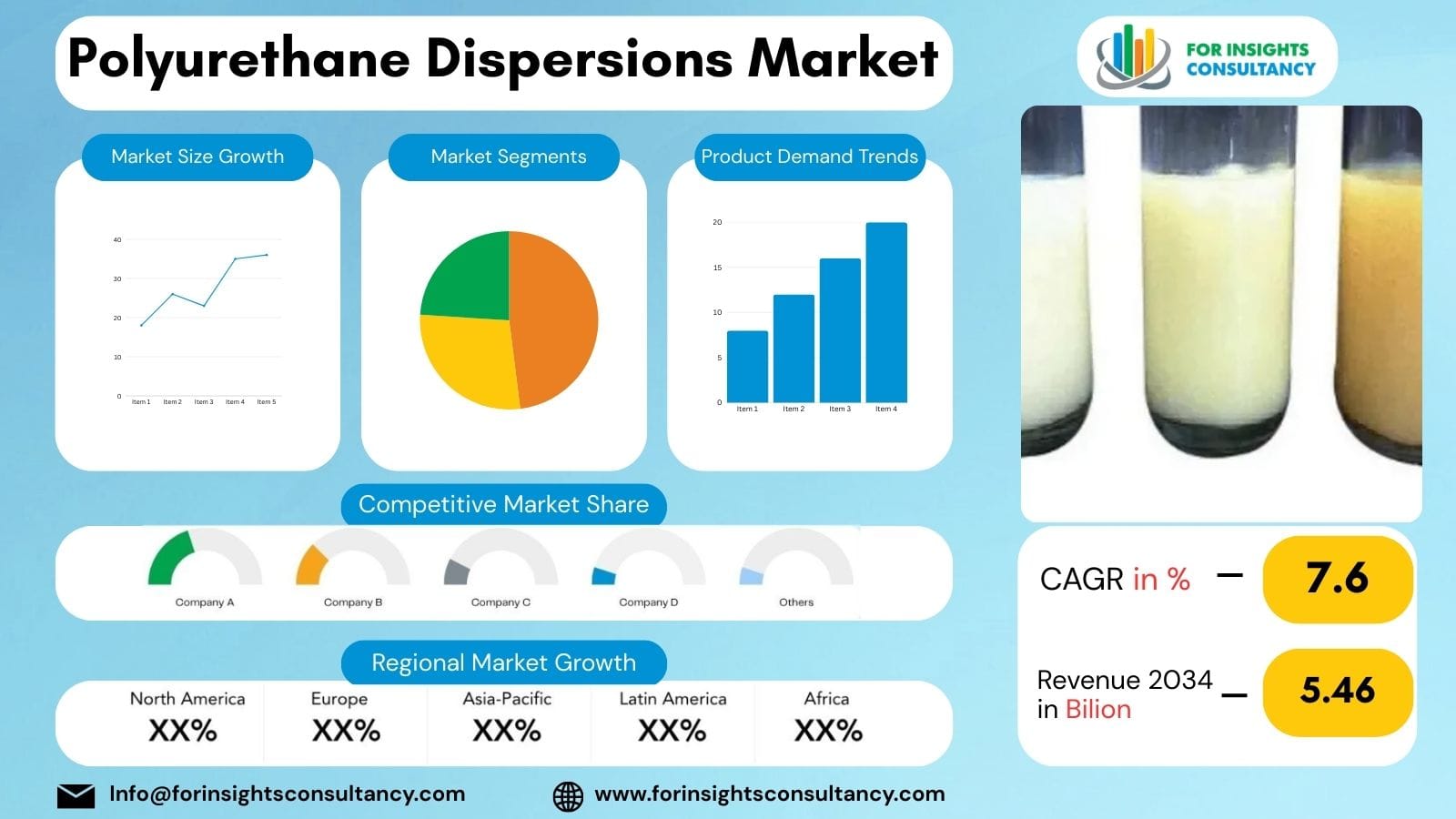
The Polyurethane Dispersions Market in 2026 is expected to experience strong growth as industries increasingly adopt sustainable and water-based coating technologies. Polyurethane dispersions (PUDs) are widely used in coatings, adhesives, textile finishing, and leather applications because they offer durability, flexibility, and low volatile organic compound (VOC) emissions. Industry estimates suggest that the polyurethane dispersions market is projected to grow at a steady CAGR through 2030, supported by strict environmental regulations and rising demand for eco-friendly industrial materials. As manufacturers shift toward sustainable chemistry and advanced polymer technologies, polyurethane dispersions are becoming essential for modern manufacturing applications.
Polyurethane Dispersions Market Overview
Polyurethane dispersions are water-based polyurethane systems designed to provide high-performance coating and adhesive solutions. These materials are widely used across industries due to their excellent abrasion resistance, chemical stability, flexibility, and strong adhesion to multiple substrates.
The shift toward environmentally friendly production processes has accelerated the adoption of polyurethane dispersions across sectors such as automotive, construction, textiles, furniture, and packaging. Compared with solvent-based coatings, polyurethane dispersions significantly reduce harmful emissions and support regulatory compliance.
Manufacturers are investing in advanced formulations that improve mechanical properties, surface protection, and durability. These developments are expanding the application scope of polyurethane dispersions and strengthening their role in the global coatings and adhesives industry.
What Is the Polyurethane Dispersions Market Size in 2026?
The polyurethane dispersions market in 2026 is projected to expand steadily due to increasing demand for water-based coatings and adhesives. Growth is supported by sustainability initiatives, regulatory requirements, and rising demand for high-performance materials in automotive, textile, and construction industries.
Polyurethane Dispersions Market Growth Drivers
Increasing Demand for Eco-Friendly Coatings
Environmental regulations limiting volatile organic compound emissions are encouraging industries to adopt water-based coating technologies. Polyurethane dispersions provide an effective alternative to solvent-based coatings while maintaining excellent performance characteristics.
Government regulations supporting environmentally responsible manufacturing practices are significantly driving the adoption of polyurethane dispersions.
Expansion of the Automotive Industry
The automotive sector is one of the major consumers of polyurethane dispersions. These materials are used in vehicle coatings, interior components, and protective finishes due to their durability and resistance to wear and tear.
With increasing global automobile production and growing demand for lightweight and durable materials, the use of polyurethane dispersions is expected to rise steadily.
Growing Demand in Textile and Synthetic Leather Applications
Polyurethane dispersions are widely used in textile coatings and synthetic leather manufacturing. These materials enhance flexibility, durability, and water resistance while maintaining comfort and appearance.
The increasing demand for eco-friendly fashion materials and synthetic leather products is further contributing to the expansion of the polyurethane dispersions market.
Challenges in the Polyurethane Dispersions Market
High Raw Material Costs
Polyurethane dispersions are produced using specialized raw materials such as polyols and isocyanates. Price fluctuations in these raw materials can affect manufacturing costs and impact overall market growth.
Technical Limitations in Extreme Environments
While polyurethane dispersions offer several advantages, certain formulations may have limitations in extreme environmental conditions, including high temperatures and aggressive chemical exposure. Continuous research is necessary to improve product performance and expand application capabilities.
Emerging Trends in the Polyurethane Dispersions Industry
Development of Bio-Based Polyurethane Dispersions
One of the major trends in the polyurethane dispersions industry is the development of bio-based formulations. These materials are derived from renewable resources and help reduce dependence on petroleum-based chemicals.
Bio-based polyurethane dispersions support sustainability goals and are expected to gain increasing market adoption in the coming years.
Growth in Wood and Furniture Coatings
Polyurethane dispersions are widely used in wood finishing and furniture coatings due to their protective properties and aesthetic performance. These coatings provide excellent resistance to abrasion, moisture, and surface damage.
Increasing demand for premium furniture and interior décor products is supporting the adoption of polyurethane dispersion coatings.
Expansion of Water-Based Adhesives
Water-based adhesives formulated using polyurethane dispersions are gaining popularity in packaging, footwear, and construction industries. These adhesives offer strong bonding performance while minimizing environmental impact.
Regional Analysis of the Polyurethane Dispersions Market
North America
North America represents a significant market for polyurethane dispersions due to strong demand from automotive, construction, and furniture manufacturing sectors. Strict environmental regulations promoting low-VOC coatings are encouraging widespread adoption of water-based polyurethane dispersions.
Europe
Europe has a well-established chemical manufacturing industry and strict environmental policies that support sustainable coating technologies. As a result, the region remains a key market for polyurethane dispersions and related water-based polymer solutions.
Asia-Pacific
The Asia-Pacific region is expected to witness the fastest growth in the polyurethane dispersions market. Rapid industrialization, increasing construction activity, and expanding automotive production in countries such as China and India are driving demand for high-performance coatings and adhesives.
Growing investments in manufacturing infrastructure and advanced polymer technologies are further supporting regional market expansion.
Competitive Landscape of the Polyurethane Dispersions Market
The polyurethane dispersions market includes several global chemical manufacturers focusing on research, innovation, and sustainable product development. Companies are investing in advanced polymer technologies to enhance product performance and expand application areas.
Market participants are also pursuing strategies such as capacity expansion, partnerships, and development of bio-based polyurethane dispersions to strengthen their competitive position in the global market.
Competition in the industry is largely driven by innovation, product quality, sustainability, and regulatory compliance.
Future Outlook of the Polyurethane Dispersions Market
The polyurethane dispersions market is expected to continue expanding as industries increasingly adopt sustainable coating technologies and environmentally responsible manufacturing processes.
Advancements in polymer science and material engineering are likely to improve the performance and versatility of polyurethane dispersions. As regulatory frameworks continue to encourage low-emission materials, water-based polyurethane technologies will remain essential for modern industrial applications.
In the coming years, polyurethane dispersions will play a critical role in enabling sustainable production across automotive, construction, textile, and packaging industries.
Frequently Asked Questions
What is the polyurethane dispersions market size in 2026?
The polyurethane dispersions market in 2026 is projected to grow steadily due to rising demand for environmentally friendly coatings, adhesives, and textile finishing materials across industrial sectors.
What are the key growth drivers of the polyurethane dispersions market?
Key growth drivers include increasing adoption of water-based coatings, strict environmental regulations on VOC emissions, expanding automotive production, and rising demand in textile and furniture industries.
Which region dominates the polyurethane dispersions market?
North America and Europe hold significant market shares due to advanced industrial infrastructure and strong environmental regulations, while Asia-Pacific is expected to experience the fastest market growth.
What are future trends in the polyurethane dispersions industry?
Future trends include the development of bio-based polyurethane dispersions, increasing demand for water-based adhesives, expansion in wood and furniture coatings, and continuous innovation in sustainable polymer technologies.