Speciality Spirits Market Growth 2026: Premium and Craft Spirits Driving Demand
Speciality Spirits Market Size, Trends Analysis Research Report By Product Type (Baijiu, Shochu, Sake, Soju, Cachaça), by Distribution Channel

Introduction
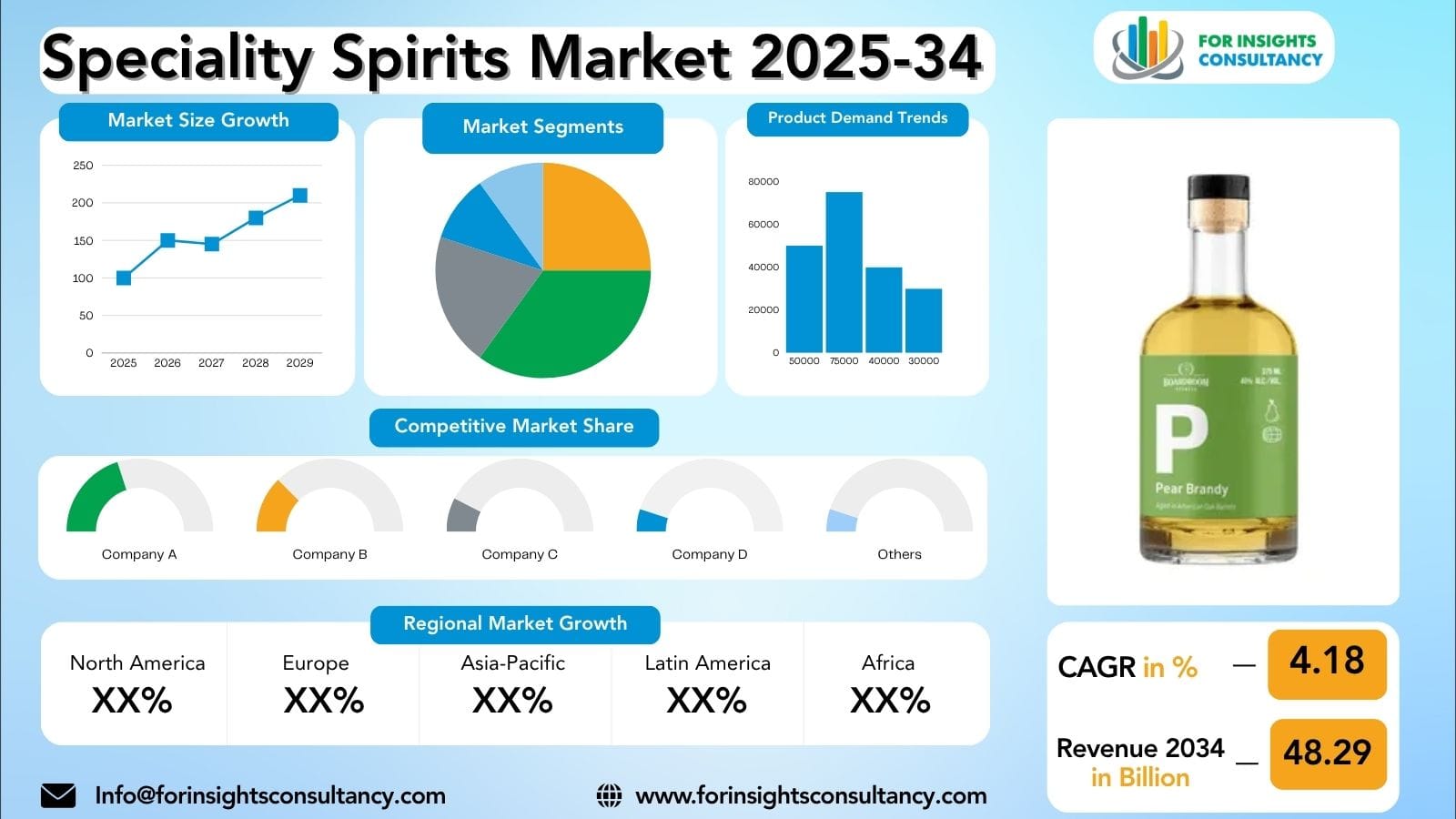
The Speciality Spirits Market in 2026 is expected to experience steady expansion as consumers increasingly seek premium, craft, and unique alcoholic beverages. The market is projected to grow at a CAGR of approximately 7–9% during the forecast period, driven by the rising popularity of artisanal spirits, innovative flavor profiles, and premium drinking experiences. Speciality spirits such as craft gin, small-batch whiskey, flavored vodka, and botanical liqueurs are gaining traction among consumers looking for distinctive and high-quality beverages. Growing demand from bars, restaurants, and specialty retailers is further accelerating the growth of the speciality spirits market worldwide.
Speciality Spirits Market Overview
Speciality spirits refer to alcoholic beverages that are distinguished by unique production methods, rare ingredients, distinctive flavors, or limited-batch manufacturing. These products often emphasize craftsmanship, authenticity, and innovation, making them attractive to modern consumers seeking premium beverage experiences.
The speciality spirits market has grown rapidly in recent years due to the expansion of craft distilleries and the increasing popularity of mixology culture. Bartenders and beverage enthusiasts are experimenting with new flavor combinations and premium ingredients, which has created strong demand for specialty spirit products.
Additionally, consumer preferences are shifting toward high-quality, small-batch, and locally produced spirits, further boosting market growth.
Key Growth Drivers
Growing Demand for Craft and Artisanal Alcohol
Consumers are increasingly interested in handcrafted alcoholic beverages produced in small batches. Craft distilleries are gaining popularity for their focus on quality ingredients and unique production techniques.
Premiumization Trend in Alcoholic Beverages
Premium and speciality spirits are becoming lifestyle products associated with quality, luxury, and social experiences, driving demand among affluent consumers.
Rising Cocktail Culture
The growth of cocktail bars and mixology trends has increased demand for unique spirits used in creative drink recipes.
Expansion of Hospitality and Tourism Industries
Hotels, restaurants, and bars are increasingly offering speciality spirits to enhance customer experiences and differentiate their beverage menus.
Market Challenges
Strict Alcohol Regulations
Government regulations on alcohol production, distribution, and marketing can create challenges for new entrants and small distilleries.
High Production Costs
Craft and speciality spirits often require premium ingredients and complex distillation processes, which increase production costs.
Competition from Established Alcohol Brands
Large multinational alcohol companies dominate global distribution channels, making it difficult for smaller craft producers to compete.
Key Market Trends
Rapid Growth of Craft Distilleries
The number of craft distilleries worldwide is increasing as entrepreneurs enter the speciality spirits market with innovative products and local flavor concepts.
Flavored and Botanical Spirits
Consumers are increasingly drawn to spirits infused with botanicals, herbs, fruits, and spices that offer distinctive taste profiles.
Sustainable and Organic Production
Many distilleries are adopting organic ingredients, sustainable packaging, and environmentally friendly production methods to appeal to eco-conscious consumers.
Premium Packaging and Branding
Speciality spirit brands are focusing on premium packaging, artistic bottle designs, and storytelling to create strong brand identities.
Regional Analysis
North America
North America represents a major market for speciality spirits due to the strong presence of craft distilleries and high consumer interest in premium alcoholic beverages.
Europe
Europe remains a key region with a long tradition of spirit production and strong demand for artisanal and heritage-based beverages.
Asia-Pacific
The Asia-Pacific region is expected to witness rapid growth due to rising disposable income, expanding urban populations, and growing interest in premium Western alcoholic beverages.
Latin America and Middle East & Africa
These regions are emerging markets where increasing tourism and hospitality industries are boosting demand for specialty spirits.
Competitive Landscape
The speciality spirits market is characterized by a mix of global beverage corporations and small craft distilleries. Companies compete through product innovation, unique flavor offerings, and premium branding strategies.
Key competitive strategies include:
- Launch of new craft and flavored spirit products
- Strategic collaborations with hospitality brands
- Expansion into emerging markets
- Investment in marketing and brand storytelling
Companies that focus on quality, authenticity, and innovation are expected to gain a competitive advantage in the speciality spirits industry.
What is the Speciality Spirits Market Size in 2026?
The Speciality Spirits Market in 2026 is projected to grow steadily as consumers increasingly prefer premium and craft alcoholic beverages. The expansion of cocktail culture and artisanal distilleries continues to support market growth.
Future Outlook
The future of the speciality spirits market looks promising as consumers seek unique drinking experiences and premium beverage options. Increasing interest in craft production, organic ingredients, and creative flavor combinations will continue to shape the industry.
Technological advancements in distillation processes and expanding global distribution channels are expected to further support market growth in the coming years.
FAQ Section
What is the Speciality Spirits Market size in 2026?
The Speciality Spirits Market in 2026 is expected to grow steadily due to increasing consumer demand for craft, premium, and innovative alcoholic beverages.
What are the key drivers of the Speciality Spirits Market?
Key growth drivers include rising cocktail culture, expansion of craft distilleries, premiumization trends, and increasing demand for unique flavor experiences.
Which region dominates the Speciality Spirits Market?
North America currently leads the market due to the strong presence of craft distilleries and growing demand for premium spirits.
What are the major trends in the speciality spirits industry?
Major trends include botanical and flavored spirits, sustainable production methods, premium packaging, and growth in craft distilleries.
Who are the main consumers of speciality spirits?
Consumers include cocktail enthusiasts, premium alcohol buyers, hospitality businesses, and collectors seeking unique alcoholic beverages.