Supermarkets Industry 2026: Digital Transformation in Grocery Retail
The global supermarket market continues to evolve as consumer shopping habits shift toward convenience, digital integration, and diverse product offerings

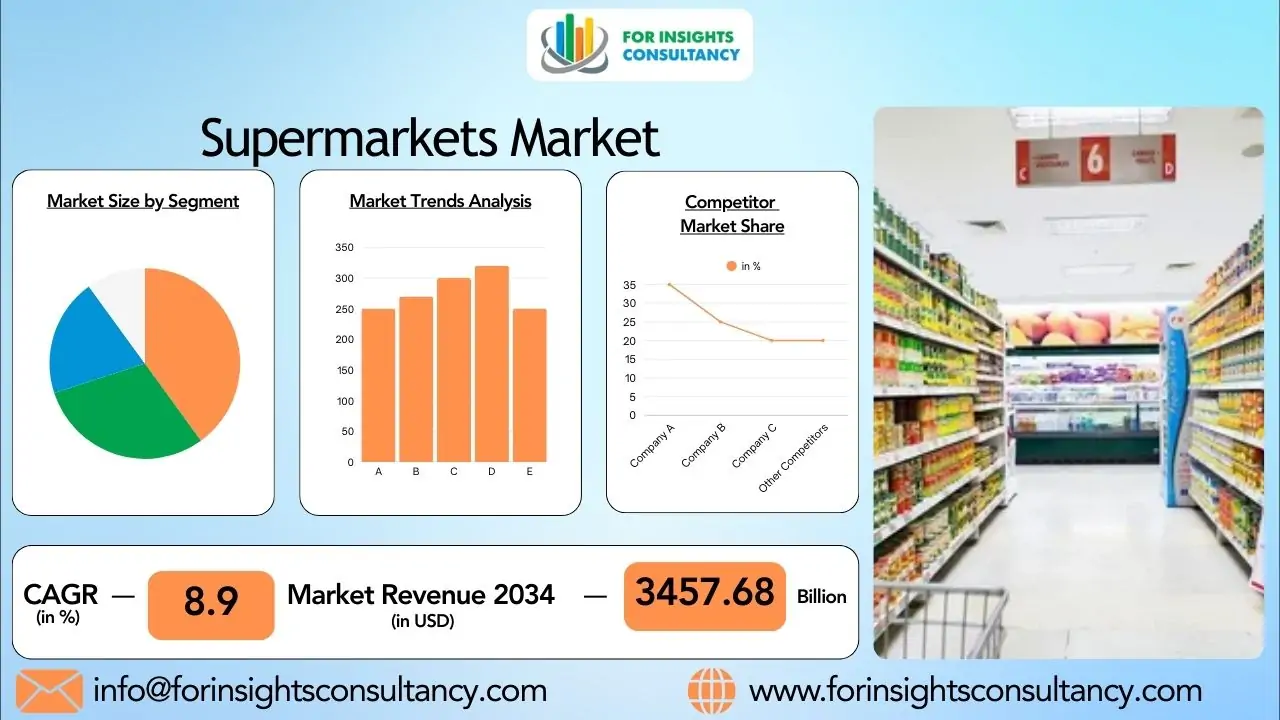
Introduction
The supermarket market plays a vital role in the global retail industry by offering a wide range of products including fresh foods, packaged goods, beverages, and household essentials under one roof. Supermarkets have become a preferred shopping destination for consumers due to their convenience, competitive pricing, and extensive product variety.
In recent years, supermarkets have undergone significant transformation driven by digital technology, changing consumer preferences, and the rise of e-commerce grocery shopping. Many retailers are investing in modern store formats, online platforms, and efficient supply chains.
By 2026, the supermarket market is expected to continue expanding as retailers adopt innovative strategies to meet evolving consumer expectations.
Market Overview
The supermarket market can be segmented based on store format, product category, and distribution channels.
By Store Format
- Large Supermarkets
- Discount Supermarkets
- Neighborhood Supermarkets
- Hypermarket-Style Supermarkets
Large and neighborhood supermarkets remain popular due to their accessibility and wide product selection.
By Product Category
- Fresh Produce
- Packaged and Processed Foods
- Dairy Products
- Beverages
- Household and Personal Care Products
Fresh food categories continue to attract consumers seeking healthy and nutritious food options.
By Sales Channel
- In-Store Retail
- Online Grocery Platforms
- Click-and-Collect Services
The online grocery segment is rapidly growing as consumers increasingly prefer convenient digital shopping options.
Key Market Drivers
Changing Consumer Shopping Habits
Consumers prefer one-stop shopping experiences where they can purchase groceries and household essentials efficiently.
Growth of Online Grocery Shopping
Supermarkets are expanding their e-commerce capabilities to reach customers through online platforms.
Expansion of Private Label Products
Retailers are developing private label brands that offer affordable and high-quality alternatives to national brands.
Urbanization and Population Growth
Increasing urban populations are driving demand for convenient and accessible retail stores.
Regional Market Insights
North America
North America has a mature supermarket industry with strong competition and advanced retail technologies.
Europe
European supermarkets are focusing on sustainability, organic products, and private label offerings.
Asia-Pacific
The Asia-Pacific region is expected to experience significant growth due to expanding urban populations and increasing retail investments.
Latin America & Middle East
Emerging markets are seeing rapid supermarket expansion as modern retail infrastructure develops.
Challenges in the Supermarket Market
Despite growth opportunities, supermarkets face several challenges:
- Intense competition from discount retailers and e-commerce platforms
- Rising supply chain and operational costs
- Changing consumer preferences for convenience and sustainability
Retailers are addressing these challenges through technology adoption, improved logistics, and customer-focused strategies.
Future Outlook for the Supermarket Market (2026)
The supermarket market is expected to evolve significantly by 2026 as retailers integrate technology and adapt to changing consumer behaviors.
Key Opportunities
- Expansion of online grocery and delivery services
- Growth of private label and premium product lines
- Integration of AI-driven retail analytics and smart checkout systems
- Increasing demand for organic and sustainable food products
Supermarkets that focus on digital transformation, efficient supply chains, and personalized shopping experiences are expected to remain competitive.