Water Treatment Chemicals Market 2026: Global Growth, Key Drivers, Industry Trends & Future Opportunities
Water Treatment Chemicals Market Size, Trends Analysis Research Report by End-Use Industry (Municipal, Industrial), by Product Type (Coagulants & Flocculants, Corrosion & Scale Inhibitors, Biocides & Disinfectants, pH Adjusters & Stabilizers, Defoaming Agents, Others)

Introduction
The Water Treatment Chemicals Market in 2026 is gaining strong momentum as industries and municipalities increasingly invest in water purification technologies. Rising water scarcity, stricter environmental regulations, and rapid urbanization are pushing governments and industries to adopt advanced water treatment solutions. Water treatment chemicals such as coagulants, disinfectants, and corrosion inhibitors play a critical role in removing contaminants and ensuring safe water for industrial and municipal use.
With the increasing demand for wastewater recycling, desalination, and industrial water management, the water treatment chemicals industry is expected to remain a vital component of the global environmental technology ecosystem.
Water Treatment Chemicals Market Overview
Water treatment chemicals are specialized compounds used to improve water quality by removing contaminants, preventing corrosion, and controlling microbial growth. These chemicals are widely used in:
- Municipal water treatment plants
- Industrial wastewater facilities
- Power generation plants
- Oil & gas processing
- Chemical manufacturing industries
The demand for these chemicals continues to grow due to the global need for clean drinking water and sustainable water management practices.
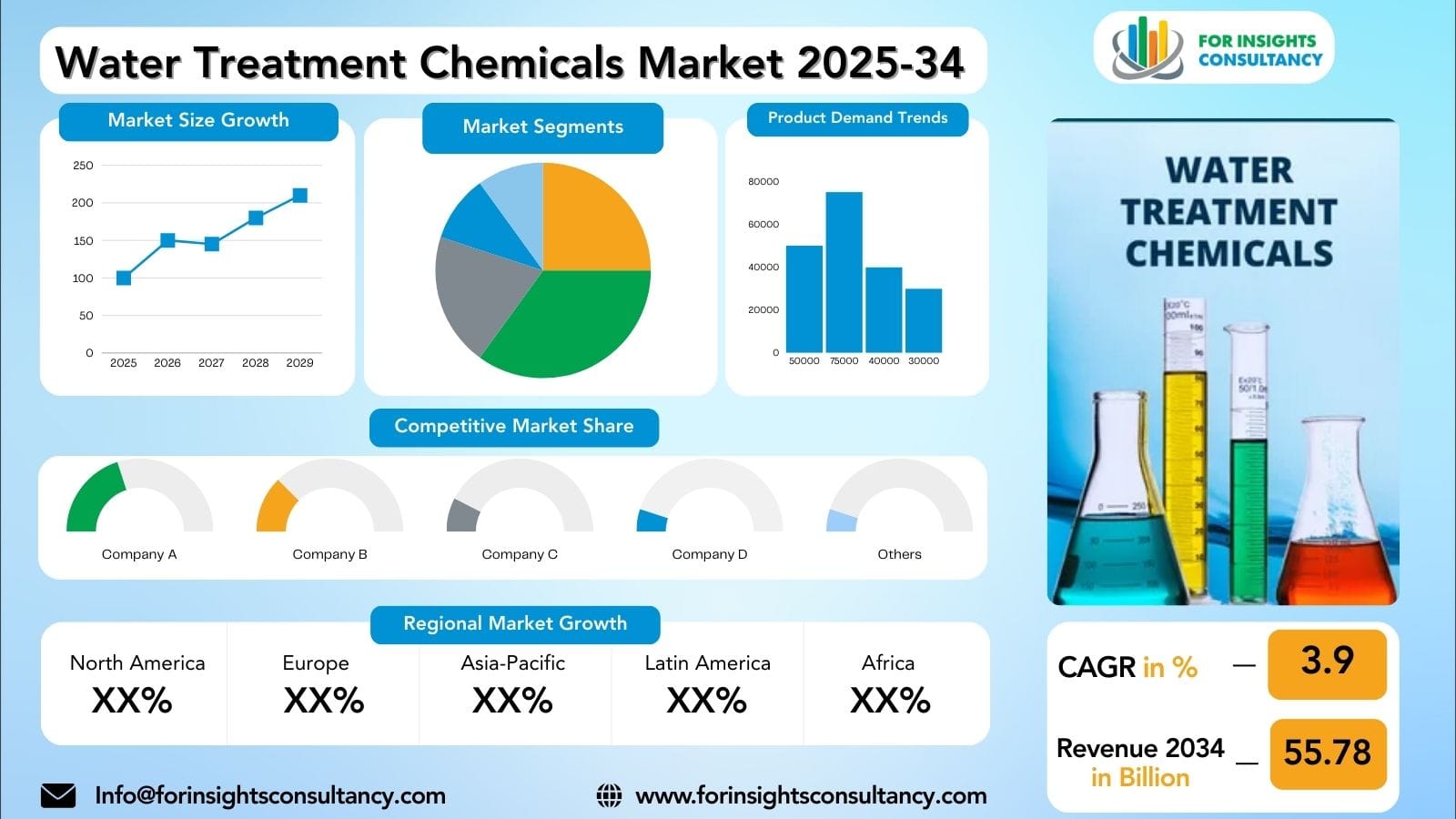
Asia-Pacific currently leads the market due to strong industrial growth and urban infrastructure expansion, while North America remains a major revenue contributor.
Key Drivers of the Water Treatment Chemicals Market
1. Rising Global Water Scarcity
Water scarcity is becoming one of the most pressing environmental challenges. Many regions are investing heavily in water recycling and desalination technologies, which directly increases the demand for treatment chemicals.
2. Increasing Industrial Wastewater Treatment
Industries such as pharmaceuticals, food processing, chemicals, and power generation produce large volumes of wastewater. Regulations require these industries to treat wastewater before discharge, boosting demand for chemical treatment solutions.
3. Stringent Environmental Regulations
Governments worldwide are implementing stricter regulations related to wastewater discharge and drinking water quality. Compliance with these standards requires advanced chemical treatment solutions.
4. Rapid Urbanization
Urban population growth increases the demand for municipal water treatment infrastructure, which significantly drives the consumption of water treatment chemicals.
Major Types of Water Treatment Chemicals
Coagulants and Flocculants
These chemicals help remove suspended particles and impurities by causing them to cluster together so they can be easily filtered out. This segment holds one of the largest market shares in water treatment processes.
Disinfectants and Biocides
Disinfectants eliminate harmful microorganisms and pathogens from water. Common disinfectants include chlorine-based chemicals and advanced biocides used in industrial systems.
Scale and Corrosion Inhibitors
These chemicals protect pipelines, boilers, and cooling systems by preventing scale formation and corrosion, which improves equipment lifespan and efficiency.
pH Adjusters
pH control chemicals maintain the optimal acidity or alkalinity of water during treatment processes.
Water Treatment Chemicals Market by Application
Municipal Water Treatment
Municipal utilities represent the largest consumer of water treatment chemicals due to the need to provide safe drinking water and manage urban wastewater systems.
Industrial Water Treatment
Industrial sectors rely heavily on treatment chemicals for boiler feed water, cooling systems, and wastewater recycling.
Desalination and Water Reuse
Water-stressed regions are investing in desalination plants and water reuse systems, increasing demand for specialty chemicals such as antiscalants and membrane cleaners.
Regional Analysis
Asia-Pacific
Asia-Pacific dominates the global market due to rapid industrialization and population growth. Countries like China and India are heavily investing in wastewater treatment infrastructure.
North America
North America holds a significant market share due to strict environmental regulations and advanced water treatment infrastructure.
Europe
European countries are focusing on sustainable water management and circular water economies, driving innovation in eco-friendly treatment chemicals.
Middle East and Africa
The Middle East is witnessing increasing investments in desalination and water recycling technologies due to extreme water scarcity.
Competitive Landscape
The water treatment chemicals market includes several global and regional players focusing on innovation and sustainability. Leading companies include:
- Ecolab
- BASF
- SUEZ
- Dow
- Solenis
- Kemira
- Nouryon
Many companies are integrating digital monitoring systems and AI-driven dosing technologies to optimize chemical usage and improve treatment efficiency.
Emerging Trends in the Water Treatment Chemicals Industry
Bio-based Water Treatment Chemicals
Environmental regulations are pushing manufacturers to develop biodegradable and eco-friendly formulations.
Smart Water Management
Integration of digital sensors, AI monitoring, and automated chemical dosing systems is improving operational efficiency.
Zero Liquid Discharge (ZLD)
Industries are increasingly adopting ZLD systems to eliminate wastewater discharge and maximize water reuse.
Future Outlook
The Water Treatment Chemicals Market is expected to experience steady growth through 2030 and beyond, supported by increasing global water demand, environmental regulations, and industrial expansion.
Emerging economies are expected to play a key role in driving market expansion due to infrastructure development and increased awareness about water sustainability.
As governments and industries prioritize water security, the demand for advanced chemical treatment solutions will continue to expand, creating strong opportunities for innovation and investment in this sector.